
history
BARA LAO KA GUMBAD & BARADARI
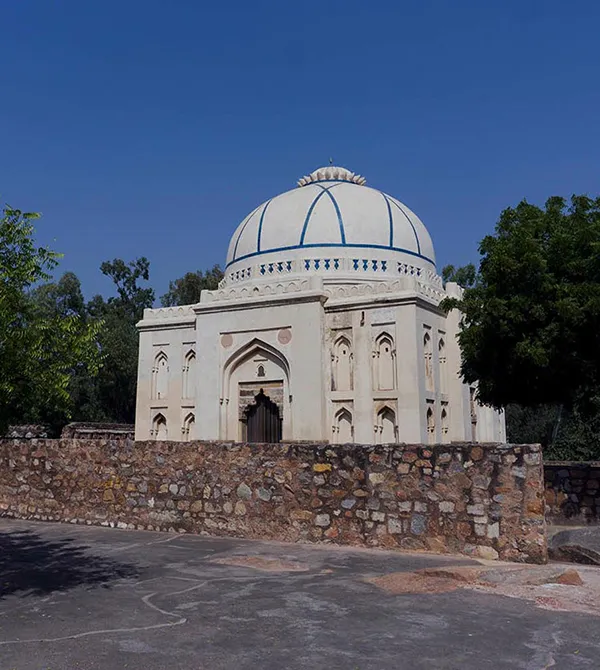
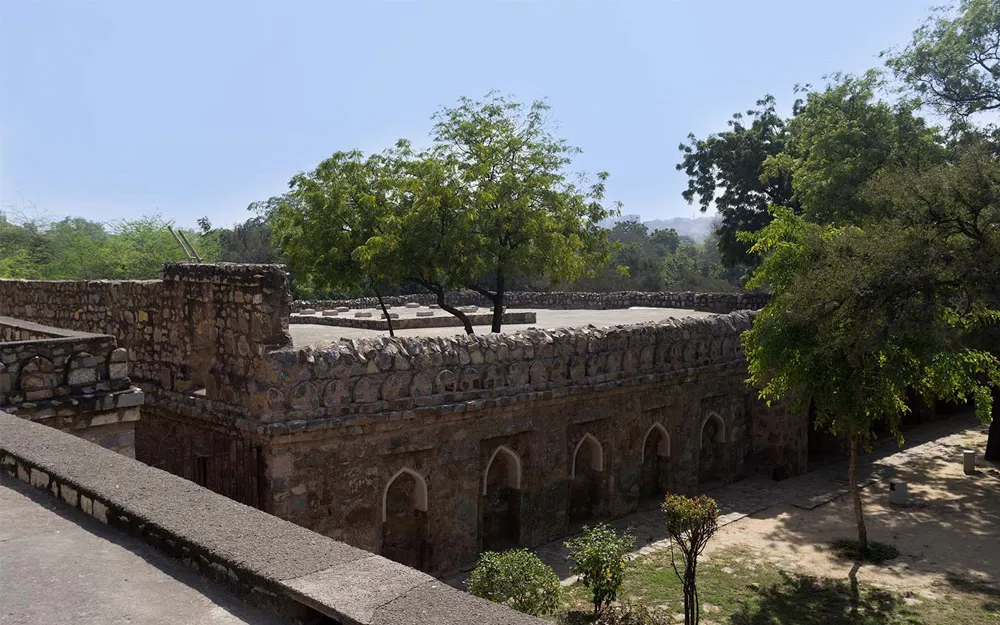
Bara Lao Ka Gumbad and Baradari date back to the Lodi era (late 15th century) and are situated inside Vasant Udyan, DDA Park in Vasant Vihar. Any specific information as to who built these monuments. is not available. The tomb known as Bara Lao Ka Gumbad stands in the centre of a raised terrace which has recessed arches. There are a series of arched compartments on the north side of this raised platform.
Over the terrace to the west side, there is a walled mosque.
The north and south corner of the mosque are strengthened by fluted circular bastions. It has arched entrances containing doorways with brackets on architraves, a typical characteristic of Lodi period tombs. The dome which surmounts the building rises from a sixteen-sided drum with decorative guldastas marking the angles of the drum which is crowned by kanguras incised in plaster, which were originally ornamented with blue tiles but are now mostly disappeared.
The West wall of Bara Lao Ka Gumbad has a central “mihrab” with elaborately incised plaster work around it.
Originally, the Baradari enclosure had arches and contained a domed Chhatri / Cupola at the centre of the terrace which has now disappeared but its ruins can still be seen at the monument site. There is one opening through a locked gate. A peek inside, and one can see a massive courtyard, with a flight of steps leading to another open space. Since the monument was left unattended, post-independence, many encroachers made the monument their home and set up electricity and running water facilities inside the monument. However, prior to the Commonwealth Games in Delhi in 2010, the Archaeological Survey of India and DDA joined hands to remove the illegal encroachment and preserve the monument.
The move also gained support from the local Resident Welfare Association in restoring the monument to its former glory.
The people residing inside the monument fought the battle of legal ownership, citing that the land belonged to Wakf board and they had inherited it from their ancestors. The ownership was granted to DDA who under the assistance of Archaeological Survey of India restored the monument.
VASANT UDYAN
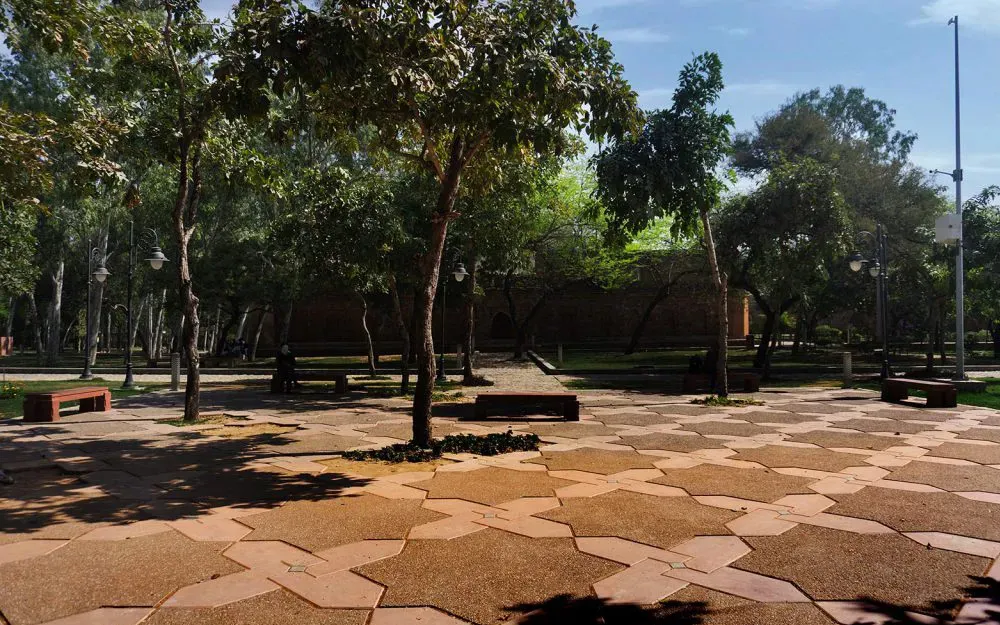
Situated in Vasant Vihar, sprawling across 18 hectares, the Vasant Udyan was laid out by Firuz Shah Tughlaq (1309-1388). In a 12 hectare area of the space lie the remains of the garden originally laid. Most constructive of all Sultans, Firuz Shah is known for establishing cities and citadels like Firozabad, Kotla and Hisar Firoza, as well as digging grand canals like Ulugh Khani and Razawahi. His biographer Afif notes in ‘Tarikh-i-Firuzshahi’ that Sultan had laid out or resurrected some 1500 gardens in Delhi and around. Firuz had a liking for fruit gardens or orchards, and his gardens would also cultivate grapes among other fruits. This is the last surviving garden of the 1500 baghs that the Sultan had laid.
We welcome you to this district park to spend some quality leisure time and immerse in the charm and romance of a forgotten era.
Our History – The basis of our future
OUR PARTNERS


